
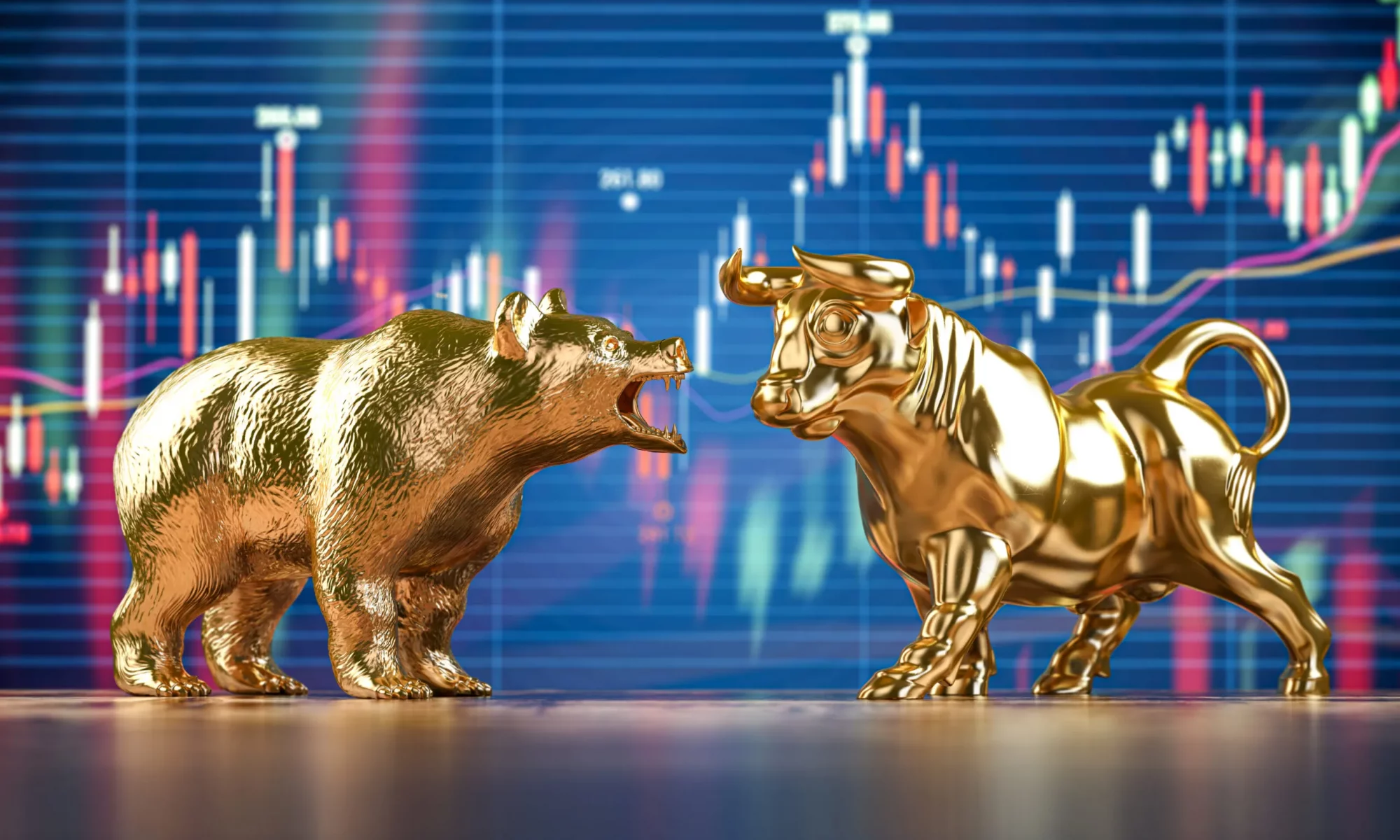
When you flip on Fox Business Network or CNBC, or peruse the latest news on the markets, odds are you’ll hear allusions to “bulls” and “bears.” These animal analogies have become core to how investors talk about market gains and losses. A bull market represents optimism, expansion, and increasing prices, while a bear market is often associated with pessimism, a contracting economy, and declining asset values. But where did these words come from? And what do animals have to do with market moods? Although the precise origins are unknown, there are some interesting theories and facts about its use as both “bull” and “bear” to describe Wall Street. From early speculative use to Shakespearean metaphor, the movement of these animals into the very lexicon of finance is as fascinating as the markets they menaced.
In this article, we will discover the origins of the bull and bear market metaphors, which will help us understand what these metaphors mean to today’s investors who operate in a field that can be volatile: finance.
Bull vs. Bear: What the Metaphors Represent
In finance, a bull market refers to rising prices that generally rise 20% or more over time in an atmosphere of optimism and investor confidence. It speaks to high investor confidence, improving economic data points, and hopes for future profits. A bear market, on the other hand, is a drop in stock prices of 20% or more from recent highs, often accompanied by fear, worries of a recession, and a slowing economy.
These animal metaphors do more than indicate the direction of prices — they capture investor sentiment. Bulls are feeling it, plowing ahead, momentum up. The bear is cautious and is in retreat or a swipe down. These charts help investors quickly understand the market mood and direction.
The Most Common Theory: How Animals Attack
One of the most commonly favored theories for these names is derived from how each animal experiences combat. A bull is assaulted by driving its horns upwards, representing prices going up. A bear, in contrast, moves its paws downward, as if to mimic falling prices. This imagery is spare, intuitive, and has helped generations of investors recall which term goes with which market direction.
Though not the originating source of the terms, it has become predominant as a way to explain the principles of investing and how the definitions apply to a typical investor, simply because of its sheer simplicity and symbolic meaning.
Early Financial Speculation and the Bearskin Jobber
The concept of a “bear” might have roots in 16th- and 17th-century European speculative trading. Then, back in the day, such selling in advance of anticipated price declines became so frequent that “bearskin jobbers” would try to sell bearskins (literally) before they had them, counting on being able to cover their short sales of bearskins at some later date at prices lower than the dictated price at the time of the exercise of the short sales. In other words, they were doing what we would later come to know as short-selling — betting that the prices of grain, hides, or copper would decline. This risky, and often deceptive, speculative activity tainted the word “bear” in the financial arena.
So the proverb “Don’t sell the bear’s skin before you’ve caught the bear,” which sprang up as a caution against speculation that extrapolates prematurely or foolishly from a partial knowledge base. The phrase was shortened over time to “bear,” and the image of doleful investors prospering when everyone else is losing gains gains currency.
Shakespeare and the Bull in Literature
“There are many ways to take it, but ‘bull’ is, in general, a much more positive term, referring to courage, strength, and nobility, like the bullfighter himself. The financial markets’ association with the term could have also been solidified by the bloody but widely popular sights of bull and bear fights in the Medieval period, predominantly in Elizabethan England.
These spectacles of a bull and a bear were the outward appearance of the van encounter. With the popularity of the fights, so grew the association of these animals with betting and fighting. In plays such as Macbeth and Much Ado About Nothing, Shakespeare himself employed the bull and bear as symbols, frequently as metaphors to signify themes of pride, power, and fate.
The Bull’s Rise in Market Terminology
The phrase “bear” probably predates its counterpart, “bull,” which was quickly embraced to describe the opposite behavior. By the early 18th century, literature and trading circles had begun to apply “bull” to investors who bet that the price of something would rise.
A “bullish” trader purchased shares of a stock in the belief that they would gain value, essentially betting optimistically. These metaphors became enshrined in financial language as market commentary caught on in newspapers and investment writings.
18th Century London: Birthplace of the Battle
The establishment of the bull and bear by London’s financial world also contributed to its popularity. Rewind to 1720 and one of the first stock market crashes, the South Sea Bubble, revealed the extremes of investor behavior. Satirical prints and essays of the time employed bulls and bears to ridicule speculators and depict the tumult of market manias.
Magazines such as The Tatler and The Spectator wrote casual shoes into editorials, cementing them in the collective psyche as non-formal wear. Those early mentions gave a linguistic underpinning for what would become standard investor lingo.
American Adoption and the Wall Street Connection
The terms made their way across the Atlantic and were firmly implanted in the United States in the 19th century as financial markets emerged. As Wall Street gained visibility, the animal metaphors started to catch on, showing up in the news, slang on trading floors, and even public statues.
The popular bronze Charging Bull was erected in 1989, not far from the New York Stock Exchange, an image of American optimism and resistance in the market. Even though it was constructed with no kind of official permission, the public adopted it. It’s one of the most symbolic and iconic images of financial success today.
Defining Bull and Bear Markets in the Modern Era
In today’s financial universe, the analysts have concocted their definitions for when a market is bullish or bearish:
- Bull Market: Increases of 20 percent or more from a recent low, which are generally prolonged for months or years. It is often a sign of a robust economy and corporate earnings.
- Bear Market: A market that has fallen 20% or more from a recent high, typically by 20% or more, often tied to an economic downturn, high unemployment, or political instability.
These definitions have since been adopted by institutional investors, market analysts, and regulators. They work to standardize reporting and manage investor expectations.
Famous Bull Markets in History
The following major bull markets have influenced investor attitudes and financial strategy:
- 1982–2000: One of the longest bull markets, ending with the Cold War, Reaganomics, and the personal computer revolution. The S&P 500 more than quadrupled.
- 2009–2020: After the global financial crisis, further central bank stimulus and the boom of the tech sector helped create the longest bull market in history.
- 2020–2021: Brief COVID-19 crash followed by a swift rebound, fueled by vaccine rollouts, low interest rates, and fiscal support.
Notorious Bear Markets
Bear Markets Bear markets tend to be more volatile + emotional:
- 1929-32: The Great Depression began with a stock market crash, which led to an 86% decline in the Dow as well as high unemployment.
- 2000- 02: The Burst of the dot-com bubble saw tech stocks collapse following too much speculation in internet companies.
- 2007–2009: The financial crisis precipitated the collapse of Lehman Brothers and a 57% decline in the S&P 500.
- 2022: The sharp sell-off was fueled by inflation and interest rate hikes, with the S&P 500 plummeting by 25%.
Cultural Influence and Artistic Depictions
Further afield from markets, bull and bear themes play out in art, fashion, and pop culture. Paintings, caricatures, and sculptures illustrated the continuing battle of the two forces. They are favorite animals for financial publications to put on their covers, to signify the market mood, and for TV anchors to say when they’re distilling one economic forecast or another.
In so many ways, the bull and the bear have broken free of finance to become a cultural metaphor for human behavior — ambition vs. caution, optimism vs. fear.
Behavioral Finance and Market Psychology
Psychologically speaking, these metaphors conform to investor sentiment patterns. In good times, markets are driven by greed and optimism, and things are priced higher than is prudent. Fear and uncertainty reign in bear markets, where panic selling and undervaluing can be commonplace.
Knowing these emotions (and others) is critical to long-term investment success. Understanding market cycles can keep investors grounded amid market swings and make them less likely to make emotional decisions based on headlines.
Should You Be Bullish or Bearish?
Neither of those is better doctrine. Bullish or bearish should represent your current market analysis, investment objectives, and risk tolerance:
- Bulls can also concentrate on growth stocks, tech firms, or cyclical groups.
- Bearish investors could hedge their bets with bonds, with defensive stocks, or even with short positions.
The key is flexibility. Markets shift, and the best investors adjust assumptions in their decision-making as well.
Protecting Your Portfolio in Bear Markets
Bear markets do not need to be destructive. Here’s what to do to protect your investments:
- Diversify: Invest in a variety of sectors and geographies.
- Rebalance: Revise asset allocations in response to market changes.
- Quality mantra: Invest in firms with good balance sheets.
- Stay in Cash: Save money and stay flexible.
- Trade With Stop-Losses: Let risk management be automated.
These moves can mitigate downside risk and help to set your portfolio up to recover more robustly.
How Economic Indicators Trigger Market Shifts
Key risk-off or risk-on sentiment indicators. Key sentiment indicators that may affect either bullish or bearish sentiment include:
- GDP Growth: Bull markets are underpinned by growth in GDP.
- Unemployment: Increasing unemployment rates may portend bearish conditions.
- Inflation: High inflation is often the bogeyman that freaks out markets, whereas low, steady inflation fuels growth.
- Interest Rates: Rising rates can be a tonic when the markets are bubbly; lower rates stimulate investment.
Getting a handle on these numbers can be useful in giving investors an idea of when they’ll be switching between bull and bear markets.
The Legacy of Bulls and Bears
Whether you think of yourself as a bullish bull or a bearish bear, these animal metaphors have more to them than visual flourish. They are the culmination of centuries of market history, human emotion, and speculative behavior. Folklore or partial truth, though they may be, these stories have shaped the way that we talk about investing.
From Shakespearean allusions to speculative slang, bulls and bears have blossomed into the iconic symbols of financial life. They serve as a reminder that markets, much like nature, operate in cycles — elusive, enduring patterns whose power can never be overstated.