
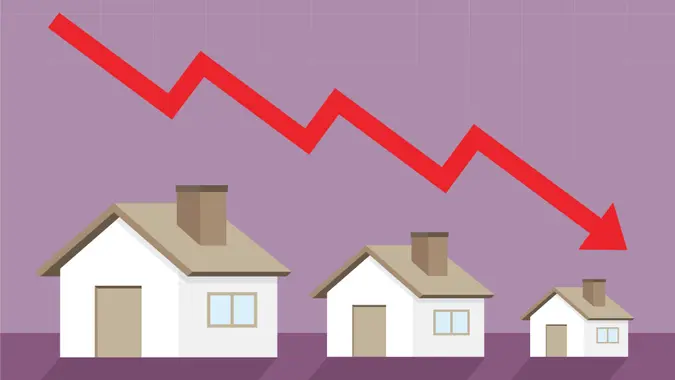
The word “2008 real estate market crash” still conveys many emotions. Still, mostly negative ones resulting from the financial wound it left behind and the associated feelings of distress, rejection, unemployment, and an economic downturn that affected people globally. Of course, the one-fifth housing market crash was a significant disaster, but it would not have caused so many negative effects without the addition of high-risk lending, non-regulated financial products, and the overall collapse of the global banking system. Do you remember the collapse of Lehman Brothers and the $700 billion TARP bailout that shocked us all back in those days? But the crisis itself was not as abrupt as it was painted in the following year’s headlines; it grew inside layers of debt, deregulation, and denial for several years.
The global crisis that was triggered by the slump was the worst since the Great Depression, and this was evidenced by the tremors that lasted years in most countries and led to radical changes in financial institutions and housing markets. The content of this text is a journey through the reasons, steps, the aftermath, and the lessons the 2008 crisis left behind—that was the period when we revised our attitude towards real estate, risk, and regulation.
The Rise of the Housing Bubble
The imminent 2008 real estate market crash was kicked off by a housing bubble that touched off the spectacular increase in house prices from 2000 to 2006. With the market being flooded by very low rates of interest and easy credit, and the American society being dominated by the culture of homeownership, the housing market flourished. In many areas, but especially in the urban ones, the home prices had doubled, which was well above the annual wage hike and the rental property appreciation.
Boasting a firm belief that the boom is to continue, banks and loan companies have developed and started implementing the “subprime housing crisis” idea – the process of granting mortgages to people who have bad credit records or not enough income for living. Very many of those have been of adjustable rate and very low initial payments that then jump in a couple of years. A majority of lenders had given certifications of such mortgages without actually confirming the income or the employment status of the borrowers. Their loans were treated as if rising property prices would in the future outweigh the borrower’s troubles with the previous payments.
Securitization: Turning Mortgages into Money
As the housing sector started booming, Wall Street quickly identified a great opportunity. The banks were grouping mortgages and selling the mortgage-backed securities to investors. It is important that these MBS, in particular, were highly profitable and low-risk as a result of their apparent diversification.
Yet a good part of the loans that were packaged together had extremely poor quality, and there was no means to protect against a possible collapse. The rating agencies that were bribed by the underwriters gave them triple-A ratings without being seen, therefore, they weren’t aware of the actual situation, and the institutional customers, including the ones from countries abroad, also entered the market without knowing about the risk that was about to come.
Debt securities were central to the collapse of a system rooted in this cause—when the real estate business underwent a downtrend, the worth of these securities fell down and thus the ‘market collapse 2008’ happened as few had predicted.
Credit Default Swaps and Hidden Risks
In order to insure themselves against the risk of the MBS default, banks and investors were buying the credit default swaps (CDS)—like the insurance for the contracts that if the borrower defaults, they pay out. These risky contracts gave borrowers the wrong belief that the market was safe and, as a result, further magnified the risk of losses.
CDS contracts had been released mostly by companies such as AIG and were not easy to regulate. The insurers did not need to have adequate capital reserves to withstand enormous losses in case of default. AIG’s situation became alarming when, all of a sudden, fewer mortgage repayments were forthcoming, leaving the company with a bill for billions of dollars and close to going under, and therefore saved by a large amount of government liquidity.
This missing transparency and on the side of the market control of the CDS market brought out the hidden and dark side of the financial system, which was one of the main drivers of a housing depression that led to the “2008 financial crisis.”
The Domino Effect: Adjustable-Rate Mortgages and Defaults
The surge in foreclosures can be traced to the recasting of adjustable-rate leading to the start of foreclosures. At the time that interest rates went up, the borrowers’ monthly payments hit the ceiling and many of them found it impossible to meet the new financial terms. They were in a situation coined “underwater” as the amount they still owed on the loan was much higher than the value of the house.
The outcome was that the share of defaulted loans increased. The foreclosures that were completed drove the prices of houses lower in the market, and those who owned homes other than that they lived in also defaulted. Therefore, the whole situation turned into a vicious cycle of foreclosure and declining prices of houses. The complete districts in some states, such as California, Nevada, and Florida, became empty.
The Collapse of Financial Giants
There were initially some fissures that later on deepened into gaps by 2008. By September, Lehman Brothers, which was the big bank in CDS and MBS, made its final move and the company filed for bankruptcy. This filing was of the kind that was the worst in the history of the United States as it was the time the crisis actually started.
Still, the disorders persisted in other institutions at the same time. Merrill Lynch was acquired by Bank of America, and Bear Stearns was bailed out by JPMorgan with the help of the federal government. Furthermore, AIG, having the obligations in CDS that were too much, was given more than $150 billion in government assistance for the corresponding bail out.
These consecutive collapses caused the “08 economic crisis” to explode due to the crisis of confidence in the banking system. The result of which was an inability to access credits in the market and as a consequence, businesses closed down and consumers reduced their spending.
The Role of Government-Sponsored Enterprises
The government-sponsored mortgage companies, Fannie Mae, and Freddie Mac, had also played a significant role in causing the crisis so deeply that it was almost impossible to untwine them. Their primary goal was to increase the number of homeowners; still, they went beyond their powers when they started purchasing riskier loans to keep pace with the flourishing market.
By the end of 2008, the mortgage financing giants had surfed the tsunami of the housing bubble to the limit of their capacity. In terms of real estate loans, their portfolios amounted to over $5 trillion. With the defaults keeping rising, the entities were put into the hands of the conservatorship of the government to avoid the aggravation of looming chaos.
It should be made clear that they were not the out-and-out cause; yet, their contribution exacerbated the situation and provided the public with the proof that systemic risk was still spreading to the institutions backed by the federal government implicitly.
The 2008 Recession Begins
As of the fourth quarter of 2007, we could fix the exact time when the word “recession” was pronounced for the first time in the economy, or for that matter, when the U.S. was declared in the “2008 recession”. In response to the fall in demand and to credit tightening, businesses had started firing their employees, and consequently, he number of unemployed had increased.
The stock market underwent a sharp decline. The S&P 500 fell to 57% from its peak of 2007 to the minimum of 2009. The Dow Jones Industrial Average registered record decline in one day. There was a surge in joblessness which was at the peak in October 2009 when unemployment was 10% whereas more than 8.7 million jobs throughout the crisis were lost.
The consumer figure dropped off, pensions were wiped out, and economic activity was coming to a halt. The whole thing was not a mere housing market crash but a global and all-encompassing financial meltdown.
Timeline of the Crash: Key Events
- April 2007: New Century Financial, one of the largest subprime lending institutions, declared the state of insolvency.
- October 2007: The stock market prices hit a peak, and the residential property prices started to decline.
- March 2008: The United States Federal Reserve steps in to rescue Bear Stearns who is undergoing financial difficulties with the help of JPMorgan.
- July 2008: Indymac Bank is seized by the Office of Thrift Supervision, the bank regulator, after it failed to meet its depositors’ withdrawal and clearing demands. This is one of the largest bank failures in the country’s history.
- September 2008: Investment bank Lehman Brothers goes bankrupt; fear of contagion arises.
- September 16: American International Group Inc. (AIG) secures the release of an $85 billion loan from the government through the Federal Reserve under the authority of Section 13(3) of the Federal Reserve Act.
- October 2008: The Congress of the United States passes the Emergency Economic Stabilization Act, which establishes the Troubled Asset Relief Program (TARP).
- March 2009: It was not until March that the stock market started to recover from the crash, though the S&P 500 index fell to the lowest point of 700.
Global Consequences
Although the precipitating event of the crash was situated in the U.S., it was a worldwide ripple effect. On the international front, banks that had poured money into the U.S. mortgage securities faced huge losses. There were sharp declines in the global stock markets, trade volumes, and GDPs in many countries.
Numerous countries introduced their own fiscal policies and kept the banking system stable by means of bailouts so that the crisis wouldn’t spread. The integration of world financial markets meant that the “2008 real estate market crash” turned into a global financial crisis.
Policy Response and Regulation
The crisis led to the most extensive finance-related legislation reforms since the days of the Great Depression. The Dodd-Frank Wall Street Reform and Consumer Protection Act was enacted in 2010. It was aimed to:
- Improve the formidable financial markets;
- Lower the likelihood of bank failure;
- Control speculative derivative trading, such as CDS.
- Create the Consumer Financial Protection Bureau (CFPB) to protect borrowers from predatory lending.
Moreover, banks were to conduct regular stress tests and hold more capital as a protective measure against future shocks.
Without a doubt, these reforms were instrumental in the financial system becoming stable and the trust of the public being regained while the naysayers are of the opinion that they will still not completely eradicate future crises.
The Human Cost of the Crisis
Besides the data, the “2008 real estate market crash” caused deep personal suffering. The foreclosure of houses led to the loss of a massive number of families’ homes. For the following generation, the dream of owning a house was broken.
Pensions were wiped out. College savings were no more. The small enterprise domain was reduced. While big banks were handed governmental assistance, the middle class was left to face the consequences of the crisis single-handedly.
Intense drain of equity happened to a dollar amount exceeding $16 trillion in American households, a report by the Federal Reserve shows. It was not an equal recovery; minority communities were the most affected and most of the time, they were the slowest to recover.
Housing Prices and Recovery Timeline
From July 2006 to January 2009, the housing prices in the United States went down by almost 30%. The recovery was very slow and it varied from one place to another. At the end of 2012, the housing prices had stabilized throughout the nation and by 2016, in multiple markets, they reached the points they were at before the crisis occurred.
However, the relatively high bar for loan qualifying, shrunken consumer confidence, and renting becoming more popular than homeownership have led to the long-term transformation of the housing market.
Could It Happen Again?
Government reforms in the wake of the crisis, plus more vigilant supervision, have diminished the possibility of another 2008-like catastrophe. Banks now have more capital, and the level of risky lending has been brought under control. Yet, we are faced with new threats.
The new system is put at risk by three main points: non-bank lenders, corporate debt growth, as well as the complexity of the newly emerging financial instruments such as cryptocurrency derivatives.
The crisis in 2008 clearly shows that it must be approached with a thought of the absolute importance of the control measures, honesty, and right lending for the markets to evolve and no more catastrophic events to repeat.
Final Thoughts: Lessons from the Crash
The 2008 real estate market crash was not caused by a single regrettable action, but rather the inevitable consequence of years of wrong policy decisions, uncontrolled markets and the belief that housing prices can only go up and never drop down.
Its consequences have not only exerted a significant influence over economic policy and housing markets, but also the whole process of financial regulation. This tragic loss serves as both a human and economic acts as wake-up call for us to take financial risk management seriously, otherwise being may lose so much.
At the end of the day, the crisis has demonstrated that whenever the real estate market crashes, it destroys all the sectors, including the employment market, the retirement funds, and the system’s trust. So, learning from 2008 is a must if we want to prevent future disasters.
Because just as much as the 2008 real estate market crash was an excruciating experience, for that very reason, it provides a road map—not only how markets fail, but how they need to be rearchitected, regulated, and reinvented to function in the favor of the public interest they were initially designed for.