
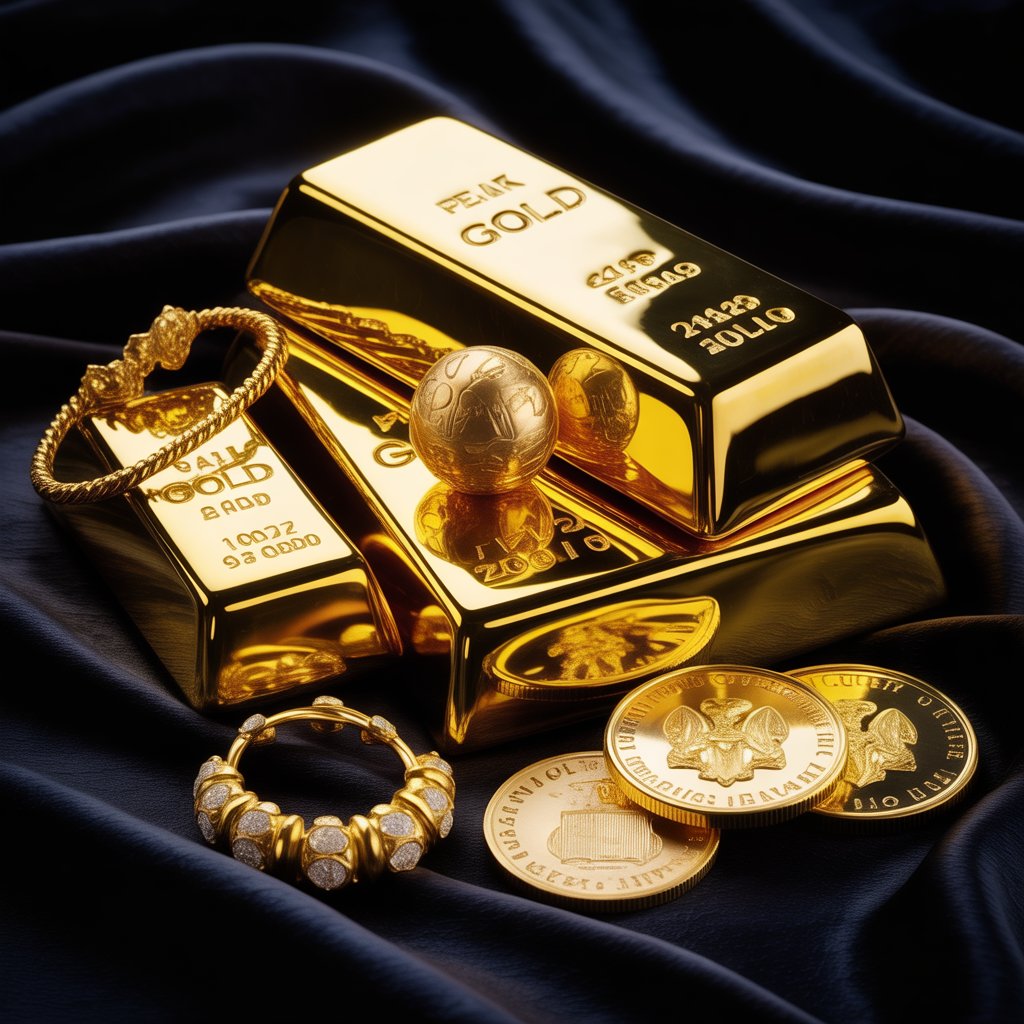
Gold has remained a cornerstone of wealth, prestige, and financial strategy for thousands of years. Its appeal is not limited to a single generation or culture. Instead, it continues to serve as a global reference point for value, stability, and long-term security. The metal’s strength lies in its unique combination of physical resilience, cultural significance, and consistent economic relevance. Whether used in jewelry, technology, or national reserves, gold maintains an influence that few assets can match.
Modern markets may evolve rapidly, yet gold retains a lasting reputation as a dependable store of wealth during uncertainty and a symbol of prosperity during stability. Understanding its multifaceted role provides insight into its ongoing importance across both history and contemporary financial systems.
What gold has meant to societies
Gold functions on more than one level: practical commodity, symbol of status, and collective store of value. Civilizations used gold to signal prestige and religious power, while central banks and private investors have treated it as a reserve asset and insurance policy. That layered history helps explain “why is gold valuable” to different groups in different ways.
Cultural and symbolic value
Across cultures, gold has served as a visible marker of rank, ritual, and identity. Jewelry, crowns, and sacred objects made from gold communicate status instantly, precisely because people share an association between the metal and prestige. This social meaning is self-reinforcing: when communities treat an object as valuable, that belief becomes part of the object’s value.
“Value is partly material and partly agreed upon; gold exemplifies both.”
For a perspective on how physical objects contribute to identity and perceived worth, see this piece on jewelry and identity from KeyToStudy. (link: Emphasizing identity using physical objects — KeyToStudy)
Physical properties that support value
Gold’s chemistry and physical behavior make it especially well-suited to functions historically associated with money and durable goods.
- Durability: Gold does not corrode, tarnish, or decay, so it can store value across generations.
- Malleability: It can be worked into coins, bars, and intricate jewelry with relative ease.
- Scarcity: Gold is uncommon enough to be valuable but not so rare that practical use is impossible.
- Divisibility: It can be melted and divided without losing intrinsic properties.
- Conductivity and biocompatibility: Modern uses, electronics, medical devices, and aerospace create steady industrial demand.
These attributes explain much of gold’s long-term appeal and help answer the practical side of “why does gold have value” in both historical and modern economies.
Economic roles: hedge, reserve, and portfolio diversifier
Gold has consistently fulfilled three overlapping economic functions:
- Reserve assets for states: Many central banks hold large gold reserves to diversify risk and signal financial solidity.
- Portfolio diversifier for investors: Gold often behaves differently than stocks and bonds, at times moving opposite to equity markets or weakening currencies, so it reduces portfolio volatility.
- Crisis hedge: In periods of intense uncertainty (geopolitical shocks, currency crises), demand for gold tends to rise because it is perceived as a safe store of wealth.
That said, gold’s price is not a mechanical hedge: it responds to inflation expectations, real interest rates, currency moves, and investor sentiment. The interplay of these forces helps explain “why is gold so expensive” during some periods and relatively subdued in others.
Scarcity, supply, and how much gold exists
Total above-ground gold is finite and grows only slowly through mining. That constrained supply, combined with steady consumer and industrial demand, underpins the metal’s long-term scarcity premium.
Mining output and recycling rates determine short-term availability. Large discoveries can temporarily depress prices, while disruptions, labor, geopolitics, or environmental restrictions can tighten supply. The balance between mined supply and accumulated stock explains why gold can maintain value even when other commodities lose it.
Psychological drivers: trust, tradition, and identity
Material properties matter, but psychology drives much of gold’s purchasing power. Trust, both interpersonal and institutional, supports gold’s role as a store of value. When confidence in paper currencies or financial institutions weakens, people often turn to assets perceived as less dependent on third-party promises. This social phenomenon clarifies “why do humans love gold”: it satisfies deep cognitive and cultural needs for security, status, and tangibility.
For further reading on trust as a foundation for social value, see this analysis from KeyToStudy. (link: The nature of trust — KeyToStudy)
Gold versus other metals and assets
Comparing gold to silver, platinum, and modern digital assets highlights distinct advantages and limitations.
- Gold vs. silver: Silver is more abundant and has broader industrial use, leading to larger price swings tied to manufacturing cycles. Gold’s scarcity and cultural cachet make it relatively more stable as a long-term store. This helps explain why gold is more valuable than silver in both symbolic and monetary senses.
- Gold vs. platinum/palladium: Some of these metals are rarer but far more cyclical because their values hinge heavily on industrial demand.
- Gold vs. fiat/digital currencies: Modern currencies are backed by governments and legal frameworks. Cryptocurrencies rely on consensus networks. Gold’s strength is its dual nature: a tangible asset with industrial uses and widely shared symbolic meaning, which sits between government-backed money and algorithmic tokens, hence the recurrent demand during times of currency stress.
Uses that sustain demand
Beyond jewelry and reserves, practical applications sustain baseline demand for gold:
- Electronics: Gold’s superior conductivity and resistance to corrosion make it an essential material in connectors and high-reliability circuits.
- Medical and dental: Biocompatibility and stability make gold useful in specialized medical devices and certain dental applications.
- Aerospace and precision engineering: Durability and reliability under extreme conditions favor gold in mission-critical components.
- Luxury and cultural artifacts: Jewelry and ceremonial objects remain a major part of global demand, particularly in regions where gold has cultural or ceremonial significance.
These uses create a multifaceted demand profile that supports long-run value and helps answer “gold, why is it valuable” beyond purely speculative reasons.
Price history: peaks, troughs, and what they reveal
Gold has experienced dramatic short-term swings while maintaining long-term significance. Historical high points often coincide with periods of economic or geopolitical distress; lows often occur when confidence in other assets is high or when speculative capital chases alternative returns.
Notable patterns:
- Surges during high inflation and geopolitical uncertainty.
- Declines when equities deliver outsized returns or interest rates rise.
- Long-term accumulation of above-ground stock, which anchors perceptions of scarcity.
These patterns confirm that gold’s price is shaped by a mix of fundamentals and human sentiment, so the metal functions as both an economic instrument and a psychological asset.
How to think about gold in a modern portfolio
Gold can serve several tactical and strategic roles depending on goals:
- Strategic allocation: A small, consistent weighting (often 5–10%) can provide long-term downside protection.
- Tactical hedge: Increasing exposure in anticipation of major instability can protect purchasing power.
- Physical vs. paper exposure: Physical gold (bars, coins) offers direct ownership and tangibility but adds storage and insurance costs. ETFs, mining stocks, and futures provide easier market access but introduce counterparty or operational risks.
Deciding on the right instrument depends on liquidity needs, cost tolerance, and willingness to store physical assets.
A strong example of gold’s modern relevance is highlighted in this excellent external reference: Why Gold Still Matters in an Age of Digital Wealth.
Misconceptions and common questions
“Gold has intrinsic value.”
Gold’s intrinsic value is a blend of its physical properties and sustained human agreement about its worth. Material usefulness matters, but social consensus ultimately converts physical metal into a widely accepted store.
“Gold always protects against inflation.”
Gold often outperforms during sustained inflation or currency crises, but its relationship with inflation is not one-to-one. Real interest rates, monetary policy, and investor flows can strengthen or weaken gold’s role as an inflation hedge.
“Gold is obsolete in the digital age.”
Digital assets and electronic payments changed how value is transferred, but they did not erase demand for tangible assets. In many instances, digital innovations have made gold easier to buy, sell, and fractionalize, extending, not ending, its relevance.
These clarifications help explain “why is gold important” in contemporary financial thinking: it remains a unique asset that blends material qualities with social consensus.
Practical steps for someone considering gold
- Clarify the objective: Reserve asset, diversifier, or speculation? The purpose dictates the choice of instrument.
- Choose the vehicle: Physical bullion, coins, ETFs, mining equities, or futures. Each has tradeoffs.
- Understand costs: Storage, insurance, management fees, and transaction spreads.
- Consider timing and allocation: Maintain a long-term discipline rather than attempting precise market timing.
- Stay informed: Monitor macroeconomic indicators, central bank behavior, and industrial demand trends.
For readers seeking concise facts and context, a focused collection of interesting info about gold can be very useful when deciding how to act.
The social contract of value
Gold’s worth ultimately rests on collective agreement: communities, markets, and institutions continue to treat it as valuable. That shared belief, reinforced by cultural narratives, practical uses, and institutional holdings, creates a feedback loop. The social contract surrounding gold is a powerful reason the metal keeps its place in modern portfolios.
This is the core of “why does gold have value”: it is simultaneously a functional material and a symbol whose meaning is upheld by widespread acceptance.
Risks and counterarguments
- Opportunity cost: Capital tied up in gold forgoes potential returns from equities or other investments.
- Volatility: While gold can reduce portfolio drawdowns, it can also experience long periods of underperformance.
- Policy risk: Changes in taxation, import/export rules, or central-bank policies can alter flows and valuations.
- Technological change: Advances that reduce reliance on gold in industry could dampen demand over time.
These factors underscore the importance of balanced allocation and realistic expectations.
Conclusion
Gold endures because it satisfies multiple human and economic needs at once: it is durable, divisible, and useful; it carries cultural and psychological weight; and it operates as a widely recognized store of value. Whether viewed through the lens of chemistry, history, or finance, gold occupies a rare intersection, material utility married to collective belief. That dual status helps explain “why gold is more valuable than silver” in monetary and symbolic terms and supports the metal’s ongoing role as an asset that many observers still trust when other forms of wealth appear fragile.
Quick Takeaways
- Gold combines practical utility with symbolic value; this combination fuels long-term demand.
- Its physical properties make it a durable store of value and a useful industrial material.
- Psychological trust, cultural meaning, and institutional holdings keep gold relevant even in a digital age.
- A modest allocation to gold can improve portfolio resilience, but it carries tradeoffs and costs.