
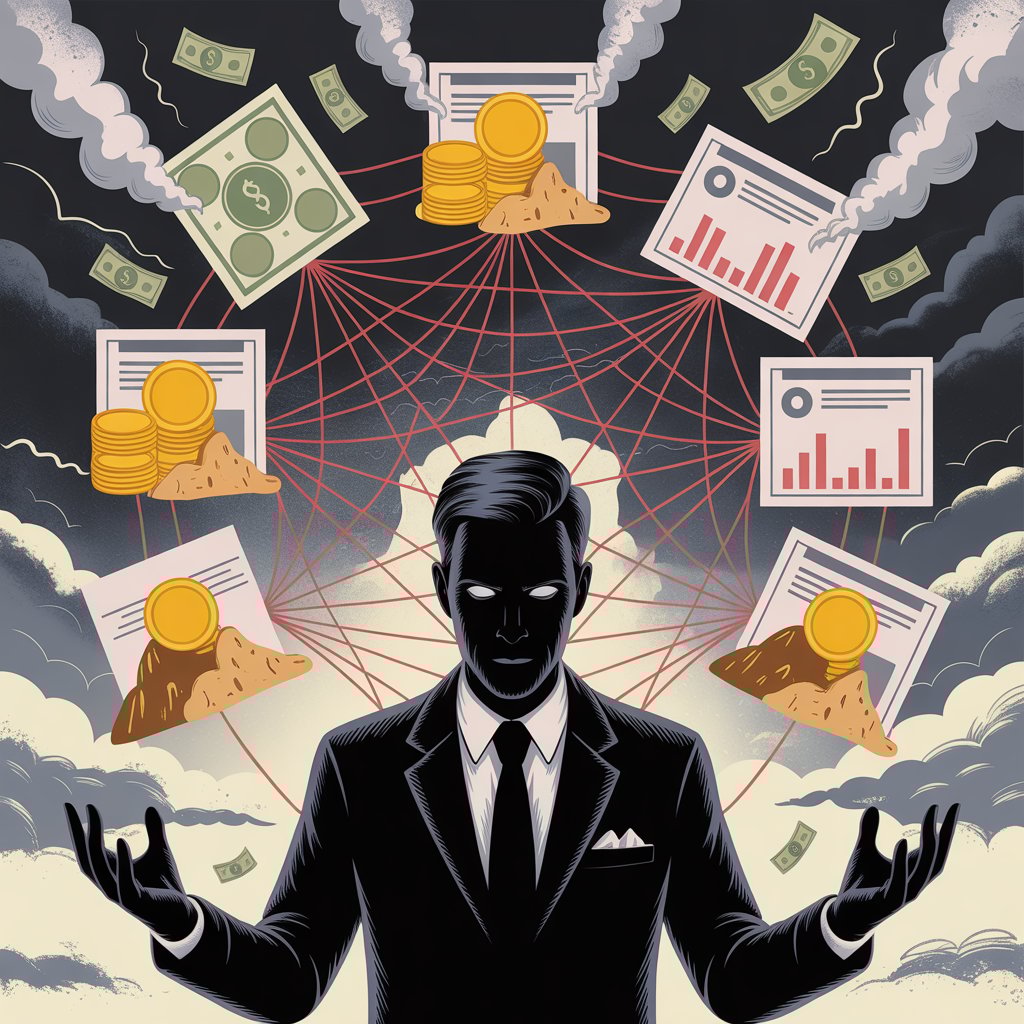
Investment fraud has existed for as long as financial markets themselves. Every decade brings new schemes, fresh victims, and massive losses that reshape the way regulators, investors, and institutions think about risk. What makes these scandals especially shocking is how convincingly they were presented, how long they lasted, and how many people, from everyday savers to sophisticated investors, placed their trust in the wrong hands.
Across history, some of the famous scams that shook confidence the most involved charismatic leaders, fabricated documents, false statements, or entire businesses built on illusion. While the methods differed, their impact was similar: lost savings, ruined companies, and new laws designed to prevent the next catastrophe. These stories are reminders that in the world of finance, transparency and verification matter more than promises.
Below is a detailed look at ten of the most notorious frauds ever uncovered, including how they worked, why they succeeded, and how investors can learn from these events to avoid falling victim to future stock market scams.
1. Charles Ponzi (Securities Exchange Company) – Loss estimated at $20 million
Charles Ponzi’s operation stands as the blueprint for what would later be known as a Ponzi scheme, a structure in which early investors are paid returns using funds from new investors, rather than actual profits. His pitch was deceptively simple: he claimed he could exploit price differences in international reply coupons and deliver returns of 50% in just 45 days.
In reality, no meaningful investment activity existed. As long as new money poured in, everything appeared healthy, but once confidence faded and withdrawals increased, the operation collapsed. Ponzi’s downfall exposed one of the largest frauds in history, and his name became synonymous with financial deception.
Investor lesson: Always verify the legitimacy of the underlying investment. High returns with little explanation are a universal red flag often seen in stock fraud.
2. Bernard Ebbers (WorldCom) – Loss estimated at $100 billion
Bernard Ebbers transformed WorldCom from a regional telecom company into a giant through aggressive acquisitions. However, the company struggled internally with massive debt and slowing revenues. To maintain the illusion of growth, executives overstated assets and hid routine expenses by categorizing them as capital investments.
When auditors uncovered the truth, WorldCom collapsed, wiping out shareholder wealth and becoming one of the biggest frauds ever recorded in corporate America. The scandal influenced the creation of stricter corporate governance rules, including provisions within the Sarbanes-Oxley Act.
Investor lesson: Take time to understand a company’s financial statements. If a business claims explosive growth but market conditions suggest otherwise, a deeper investigation is necessary.
3. Jordan Belfort (Stratton Oakmont) – Loss $200 million
Jordan Belfort built Stratton Oakmont on high-pressure sales tactics and manipulation. His firm specialized in promoting low-quality “penny stocks” to unsuspecting investors while secretly preparing to sell large internal holdings for profit. This activity, known as a pump-and-dump maneuver, inflated stock prices temporarily before they crashed, leaving victims with significant losses while insiders walked away with fortunes.
Popular culture later glamorized his lifestyle, but the financial damage was real. Belfort’s tactics made him one of the biggest scammer figures in modern finance.
Investor lesson: Avoid unsolicited investment calls or aggressive sales pitches. Legitimate financial professionals do not pressure clients into sudden decisions. This type of manipulation represents some of the worst scams ever carried out on retail investors.
4. James Paul Lewis Jr. (Financial Advisory Consultants) – Loss estimated at $311 million
Lewis built his fraud through trust, one of the most powerful tools in deception. His scam focused on affinity groups, using personal recommendations within communities to attract new investors. People believed his promises because they came from friends, colleagues, or religious networks. Over two decades, Lewis diverted millions toward luxury spending while providing fake statements to maintain the illusion of steady returns.
Affinity frauds are especially dangerous because victims rarely question the source. This case became one of the biggest scams in history involving local community referrals.
Investor lesson: Regardless of the referral source, verify every investment independently. Trust is not a substitute for due diligence.
5. Michael de Guzman (Bre-X Minerals) – Loss estimated at $3 billion
Bre-X became a global sensation in the 1990s when it announced a massive gold discovery in the jungles of Indonesia. The company’s stock skyrocketed as investors rushed to take part in what appeared to be one of the greatest mineral finds ever reported. But the core samples were falsified. Geologists were misled, investors were deceived, and the company’s valuation evaporated once the truth surfaced.
This event remains one of the biggest scams in history for the mining sector, a stark reminder that even science-based industries can be manipulated with fabricated data.
Investor lesson: Resource exploration companies must be verified through independent geological studies. Never rely solely on internal reports.
6. Sam Israel III (Bayou Hedge Fund Group) – Loss $350 million
Israel’s hedge fund attracted investors with extravagant projections, claiming billions in future profits. When the fund underperformed, he created fake accounting firms and falsified audit documents to hide the losses. The longer the deception continued, the more desperate the tactics became. Eventually, the scheme unraveled, leading to one of the most notorious hedge fund collapses.
Bayou serves as a powerful example of how false reporting can fuel some of the largest frauds in history, especially when investors fail to confirm whether audits come from legitimate third-party firms.
Investor lesson: Always verify who audits a fund and whether custodians actually hold the assets being reported.
7. Joseph Nacchio (Qwest Communications International) – Loss estimated at $3 billion
Joseph Nacchio’s scheme involved inflating revenue numbers to artificially boost Qwest’s stock price. While the company appeared prosperous, internal documents showed a completely different reality. Nacchio then engaged in insider trading, selling his personal shares before the stock crashed, profiting significantly while investors suffered losses.
His actions placed Qwest among the largest scams in history, cases involving telecommunications fraud.
Investor lesson: Review executive trading behavior. Unusual insider selling is often a sign that reported performance may not match internal realities.
8. Barry Minkow (ZZZZ Best Inc.) – Loss estimated at $100 million
Barry Minkow built ZZZZ Best on forged documents, nonexistent contracts, and fictional customers. At just 19, he convinced investors that his carpet-cleaning business was rapidly expanding into a nationwide operation. He crafted an entire corporate universe through fake invoices and deceptive statements.
When investigators uncovered inconsistencies, the entire business collapsed, revealing one of the biggest scams in history perpetrated by a teenage founder.
Investor lesson: Be cautious of companies that grow too quickly without clear operational evidence. Extraordinary success requires extraordinary verification.
9. Kenneth Lay and Jeffrey Skilling (Enron) – Loss $74 billion
Enron is perhaps the most infamous corporate scandal aside from Madoff. Executives used complex accounting structures to hide debt and inflate profits, creating the illusion of stability and growth. Stock prices soared, employees invested retirement savings into company shares, and institutional investors praised its innovations.
When the truth surfaced, Enron collapsed almost overnight, eliminating billions in shareholder value and becoming one of the biggest frauds in history involving corporate accounting.
Investor lesson: If a company’s financial structure seems intentionally confusing, consider that complexity may be a smokescreen hiding underlying losses.
10. Bernie Madoff (Bernard L. Madoff Investments Securities LLC) – Loss estimated at $65 billion
Bernie Madoff executed what many consider the biggest scam ever exposed in financial markets. For decades, he issued fake statements showing remarkably consistent returns regardless of market conditions. The respect he commanded in the investment world shielded him from scrutiny. When the financial crisis hit, and investors demanded withdrawals, the truth emerged: the statements were fabricated, and no real investment activity existed.
Madoff’s operation stands as one of the largest scams in history, responsible for unimaginable losses and long-lasting damage to countless lives.
Investor lesson: Performance reports mean nothing without independent custodianship and third-party audits. Always verify where your money is held and who oversees it.
What these scandals teach us
Looking across all ten cases, several themes appear consistently:
- Fraudsters rely on trust, secrecy, and urgency.
- Victims often overlook inconsistencies because early returns seem convincing.
- Many of the biggest frauds ever succeed due to a lack of independent oversight.
- Greed, fear, and social pressure influence even experienced investors.
- Transparency and documentation always matter more than charisma or reputation.
By understanding these patterns, investors can better protect themselves. Today’s market continues to evolve, but human behavior, especially the desire for quick returns, remains the same.
Final Thoughts
While these scandals differ in method, scale, and industry, they all share a common lesson: no investment is too big, too respected, or too profitable to question. Vigilance, independent verification, and a structured due diligence process are essential for avoiding the next wave of financial deception.
Fraudsters continue to adapt, but so can investors. By learning from the worst scams ever, individuals and institutions alike can strengthen their strategies and recognize red flags earlier, before it’s too late.
Useful resources for further reading
- Bernie Madoff — background and case timeline. (https://en.wikipedia.org/wiki/Bernie_Madoff)
- Enron — the accounting scandal and reforms that followed. (https://en.wikipedia.org/wiki/Enron)
- Charles Ponzi — how the original scheme worked. (https://en.wikipedia.org/wiki/Charles_Ponzi)
- U.S. Securities and Exchange Commission (SEC) — enforcement actions and investor alerts. (https://www.sec.gov)
- Bre-X — the collapsed gold story. (https://en.wikipedia.org/wiki/Bre-X)