
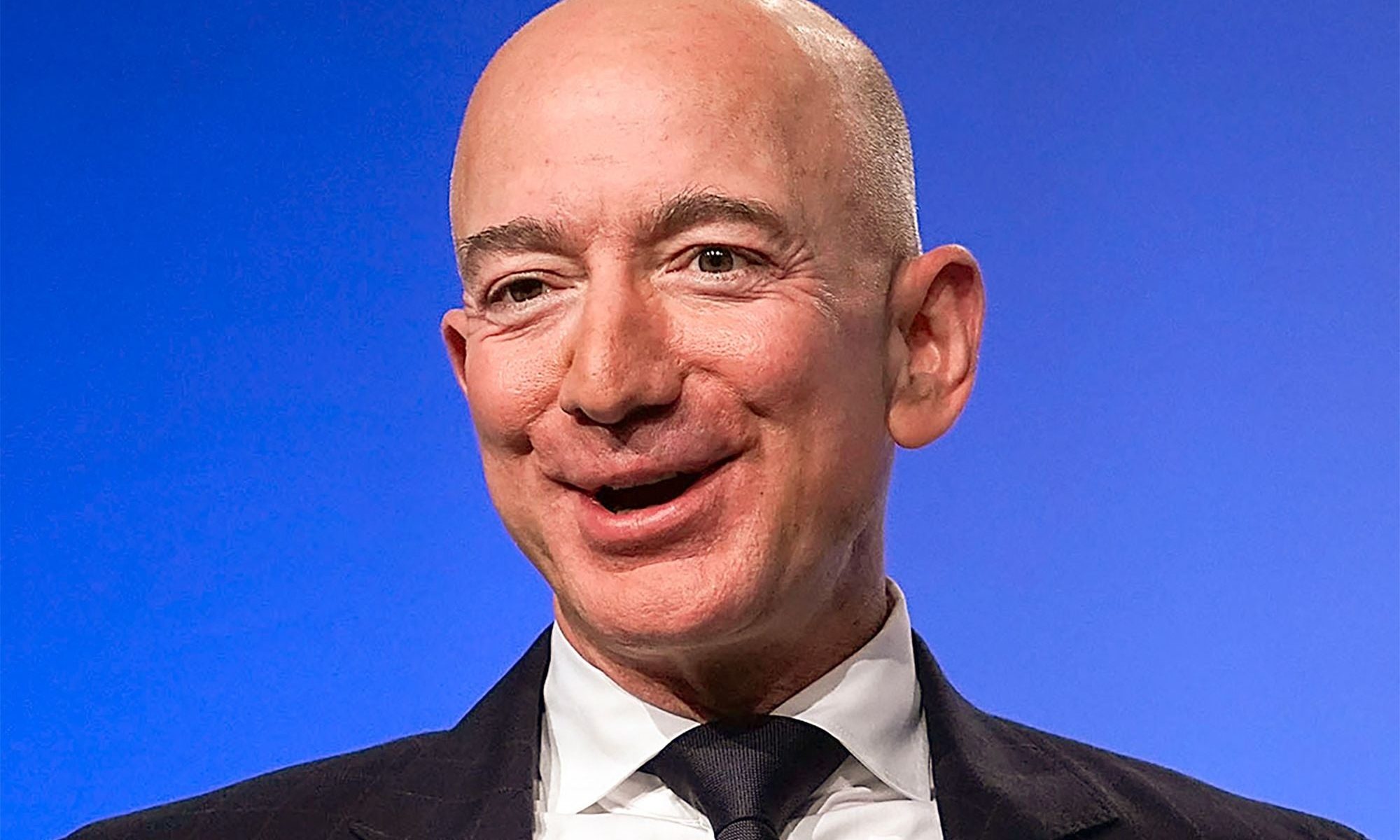
What is it that you need to do to make yourself the most influential visionary of the era? According to Jeff Bezos, entrepreneurs become influential by being brave enough to think differently, showing unwavering discipline, and being unceasingly obsessed with customers. Amazon’s founder, Jeff Bezos, didn’t start a company; he manifested a groundbreaking business model that revolutionized retail and technology. The extent of the financial effect, $194.4 billion, and the breadth of his global influence, which is difficult to measure, are the best ways to describe Bezos’s rise with the use of a lot of these words.
The case of Bezos’s rise is a warehouse full of experiential evidence that can be utilized by a business founder, a dreamer, or a maker to accomplish their goal. Everything from having no regrets to being fearlessly innovative, these principles are deeply rooted in practical implementation rather than being hollow words. The latter can be seen through creating the most forested path and being free from fear. If you are embarking on your very first start-up venture or have been in charge of a business that is currently expanding, you can borrow several tricks from Bezos and his thinking to chart a business direction. Want to discover the secrets about the pioneer of Amazon and what actions are relevant for you today? Building momentum doesn’t come from waiting but from swift forward motion!
1. Act Boldly Before You’re Fully Ready
Jeff Bezos thought there was no good time to start, but he implemented his ideas immediately. He changed the status quo in 1994 by switching his career from a high-paying job in the finance sector to trying something different. What makes him different is his refusal to be stopped by the unknown. Most entrepreneurs are the kind who over-plan and eventually achieve little and overstay in the storm of uncertainties. Bezos thinks the grass will grow under the feet if the supposed painter keeps planning on and on. The actual idea of taking an activity even before everything is in place is the most successful. The action builds up speed, and therefore, you get the results. The breakthrough, in turn, lightens the idea you hold.
2. Implement the Regret Minimization Framework
Bezos did not only think about usual decision-making frameworks when he was about to quit his job on Wall Street. He came up with a regret minimization framework by himself. He mused to himself at 80, thinking back on his life. Was it possible that he would regret it if he had tried something and failed? Most probably, he wouldn’t. However, if he did not try at all? That would be very painful for him forever. This distant perspective is vital for entrepreneurs to overcome their fear of the future and not do something they regret. Moreover, this approach is the reason why it is one of the most exciting business advice pieces, as it reroutes the attention of the people from success to significance. Change how you look at the problem and see it from another angle at the next difficult juncture. This might even change your life trajectory.
3. Achieve with Calm, Not Crisis
Amazon took six years or more to become profitable. Bezos never hurried the process. He made sure that he focused on scaling, efficiency, and innovation, eventually reaping the benefits of the short-term gain. Although his persistence in the path of lasting growth annoyed some investors, this trait led to Amazon’s unshakable position in the market. The world today is all about rapid growth, but Bezos is one of the few who seems not to be part of that thinking. He taught the world that endurance is more important than quick wins, as he invested profits back into the company and continuously delivered to customer needs. Through their actions, Amazon established a scalable platform for the future. Such a practice seems weird in most entrepreneurship tips supporting quick growth and lucrative strategies. However, in most cases, a real win always takes some time, and endurance is a competitive advantage.
4. Get Noticed by Being Extraordinary
At Amazon’s early stage, Bezos did not count on typical marketing tactics. Instead, he believed delivering a great customer experience would automatically result in word-of-mouth marketing. He said that customers tell each other if you build a great experience. The former statement here is not just correct; is that grabbing attention without anything else? Relying on the tactic demands smartness from the creators, and they should be careful that they only move forward with ideas that the masses can efficiently utilize. This method is not only money-saving but also feels pure from the inside. Clients give great respect to peer reviews in comparison with advertising narratives. To bring a buzz, the bromide makes something people want to discuss. That is among the most effortless and effective growth strategies, not involving pouring money into unnecessarily high quantities.
5. Obsess Over Customer Experience
Many top executives who have set customer satisfaction as the central goal, like Bezos, are few. He said our mission is to become the most customer-centric company on Earth. The foundation of Amazon’s success is this belief. From the lowest to the highest of the high, the company has constantly kept its customers in focus for every decision. Bezos trusted that earning the customers’ trust was much more valuable than the company’s financial profits. Customer support was regarded as a way to gain an edge over the competition and not simply a money-burning activity. In a LinkedIn session featuring Jeff Bezos, he made the point that trust is built by being consistent, and caring is done to create loyalty. Every founder should ask, How can we make this easier, faster, or more delightful for our users?
6. Lower Prices Relentlessly
Bezos favored paying lower operating costs to contribute to profit and customer satisfaction. There exist two types of companies: those that attempt to charge more and those that charge less, he quipped. Ever the price chaser, Amazon chose the latter. As a result of the low-cost position, this business strategy resulted in the company being prominent in several ways to acquire customer trust. Bezos always made it a point for his teams to continuously improve ways to reduce costs as the company grew and expanded. Rather than being more expensive, many businesses are more likely to use a lower-price sales strategy. The appeal of Amazon was the transformation of the underdog image to the market leader, which was achieved by the low-cost approach and the prolonged relationship with customers. The underserved market and budget-hit individuals now have a new channel to purchase quality items at the best prices. The phrase be affordable and valuable was a clear and strong message to some people who misunderstood that concept.
7. Make Innovation a Non-Negotiable
Bezos alerted that the danger of not evolving is more perilous. He was unrelenting in pursuing market-changing innovations, which took Amazon from a small bookseller to a tech giant with AWS, Alexa, and Prime. It was the prime competitor, i.e., Amazon’s entire existence. The richest, therefore, made the company rise in the face of the dangers of paused development. Understandably, cost-efficiency was a must, and Bezos was the first to drive imagination into the whole company. The theme of the talk could be defined as the following: the difference between the entrepreneur who wants to be like Jeff Bezos and the one who does not; there are two unique features: the first one is that he is a risk-taker, data-driven, and the one who prefers to break the pre-existing concepts. The point for the entrepreneurs here is to construct a system in which the daringness to think of big ideas is rewarded, not only the effect of a quick win.
8. Cultivate the Perfection of Adaptive Inflexibility
Bezos first aired the idea of being stubborn in vision and flexible in details. He was committed to the cause of Amazon while being aware that to be successful, it was necessary to change the tactics if required. In that context, he states, If you’re not stubborn, you’ll give up on experiments too soon. You’ll pound your head against the wall if you’re not flexible. This approach allows companies to iterate without losing their identity. Entrepreneurs often fall into one extreme—either pivoting too often or sticking too rigidly to outdated plans. Bezos’s model enhances a mix of the following elements: stick to your vision, but still let the path go through iterations based on feedback and results.
9. Get Real (But Still Dream Big)
Bezos frequently accepted that failure was probable. Instead of being disappointed, he was okay with the possibility of things going wrong. If you foresee setbacks, you feel less harmed when they happen. The mindset also alleviates stress and makes you more resilient. He said, For entrepreneurs, realism is essential. During that time, Bezos didn’t stop indulging in dreams. That fusion of practical yet ambitious beliefs has always been considered excellent business guidance. You must have a picture of the future in mind and keep a stable understanding to build something significant and survive the ups and downs.
10. Be Taught (and Enhance On) What Works
Bezos wasn’t averse to investigating his peers’ playbooks. He admitted that we watch our competitors, learn from them, and copy those things as much as we can. The companies were not disrupted but instead utilized more intelligently. Many founders think originality means shutting oneself off from the ideas of the rest. In the end, copying is often the most intelligent decision—it keeps the door open to observing the best practices and giving them a twist of your own. Innovation does not map to invention all the time. Sometimes, integration is the key—mixing with the most prominent others have already achieved and adding your flavor to it.
11. Reverse-Engineer from Customer Needs
Amazon developed the Kindle by solving the customer’s problem rather than trying to find a product matching their internal capabilities. This work-backward customer needs identification, and the product development model was quite disruptive because it often meant learning new skills. Brands that have used this strategy have found that they have their customers aligned. This is the primary approach for Jeff Bezos’ entrepreneurs. According to a study by American Express, 69% of entrepreneurs who designed products before finding a market were the reason for the failure. Bezos did the opposite: locate the pain point and fix it. It’s the right way to make people interested in and buy the product.
12. Ignore the Critics
Bezos said we’re comfortable being misunderstood; it’s not our natural state. He, of course, represents the archetype of the visionary. When Amazon first came out, they were ridiculed for the mere notion of selling books online. Detractors come knocking when an unconventional move is made. Besides that, Bezos was adamant about advising entrepreneurs to keep walking their path. It was of great significance that he could not be stopped from pursuing the new venture. Let the results and the impact of your innovation be your talking point.
13. Hire with High Standards
Bezos icily observed that he holds every recruit to an incredibly, possibly unrealistically high bar separating the sheep from the goats. If you get to the point where you interview someone you’re not sure of, you won’t dare hire him, was his firm opinion. Every new staff member should fulfill a role and improve the company culture. Consequently, you will always have direct evidence of the specifics of this person’s on-the-job performance, unlike if that culture were established only through a few sizable, representative cases. Make a prudent choice.
14. Keep the Bigger Picture in Mind Even Decades Ahead
Bezos established Amazon with a far-sighted vision. He would often make decisions that were very detrimental to the short-term earnings, but these decisions he made had profits in the long term as their foundation. He was under the idea that customer trust and operational excellence affect business growth over a period. At times, he revealed that we may take measures consistent with a short-term fall in sales, and we still do it. This method is indeed all but absent; still, it is powerful. Besides being committed in a big way, he has fashioned a company built for the future. To the person who finds this situation presents a demanding challenge, yet it can be easily overcome after a few practices.
15. Take Risks and Dream Big
Bezos never gives up; he continues his mission to work hard, have fun, and make history, which is still vital to him. Working not only for the pleasure of Jeff Bezos but also for the young entrepreneurs will benefit society greatly. Not just merely running a business, but creating a legacy as well. Measure success, and thinking greater than money gives power to your work, which could lead to your impact through various life-changing arenas, companies, or even globally. By starting with such a great desire, the quality of things you come up with goes up, your ability to get through challenges gets more assertive, and you can influence many more.
The lasting legacy of Jeff Bezos’s entrepreneurship: fearless but rational, customer-centered, and focused on tomorrow. From avoiding regretful situations to creating excellent things, this Bezos template is a smart way for someone striving to change something in the world. May these understandings carry you, and may they be your ambition. Everyone’s beloved entrepreneur, Jeff Bezos, will always be the best example: Enclosed perfection.